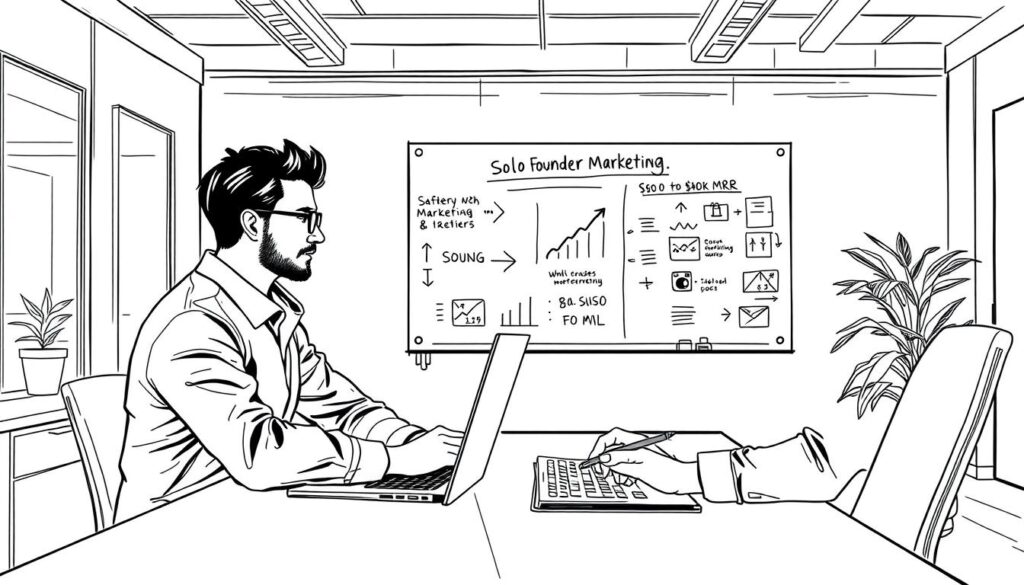
You’ve invested hours crafting a high-value pillar blog post. It’s packed with insights, data, and answers your audience’s biggest questions. But once published, its reach is limited to those who prefer reading. Repurposing that asset for audio-first audiences is a powerful growth lever.
As a solo founder, you can’t afford to create unique content for every channel from scratch. This is where smart repurposing comes in. Turning a blog post into a podcast episode allows you to reach a new audience, build deeper authority, and get more mileage from your best work.
This strategy is a core part of the philosophy we cover in our guide on how one blog post can feed more than ten growth channels without causing founder burnout.
Table of Contents
- Before You Start: Prerequisites for Success
- Step 1: Deconstruct Your Pillar Post into an Audio-Friendly Outline
- Step 2: Record Your “Blogcast” Episode Using Your Outline
- Step 3: Edit and Prepare Your Audio for Publishing
- Step 4: Publish and Promote Your New Podcast Episode
- Common Mistakes to Avoid When Repurposing Blog Content for Audio
- Key Takeaways
- Frequently Asked Questions
- Conclusion
Before You Start: Prerequisites for Success
Before hitting record, a little preparation ensures a smoother process. First, select the right blog post. The best candidates are your long-form “pillar” articles—comprehensive guides that are evergreen and have already proven valuable to your readers.
Next, gather your basic equipment. You don’t need a professional studio. A quality USB microphone, a pair of headphones, and a quiet room are all that’s required to start. Remember, the goal is clear audio, not radio-broadcast perfection. Your expertise is the star of the show. Your audience will forgive minor imperfections if the content delivers value.
Blog Format vs. Podcast Adaptation
| Blog Element | Written Format (Blog) | Audio Adaptation (Podcast) |
|---|---|---|
| Headings (H2, H3) | Break up text and improve scannability. | Become verbal signposts and talking points. |
| Bullet Points/Lists | Present information concisely for easy reading. | Should be spoken conversationally, not read as a list. |
| Images & Charts | Visually illustrate data and concepts. | Need to be described verbally (“The chart shows…”). |
| Hyperlinks | Allow readers to click for more information. | Must be read out or referenced (“Find the link in our show notes.”). |
Step 1: Deconstruct Your Pillar Post into an Audio-Friendly Outline
Resist the urge to simply read your blog post aloud. Written content doesn’t translate directly to audio; it often sounds robotic and stiff. Instead, use your post’s structure as the foundation for a speaking outline. Your H2s and H3s become the main talking points of your episode.
For each heading, jot down a few bullet points to guide your discussion. Plan for a conversational intro and outro. Add transitional phrases to your outline like, “Next, let’s talk about…” or “A common question I get is…” to help the listener follow along. This creates a natural, engaging flow.
Essential Podcast Starter Tools
| Tool Category | Budget-Friendly Option | Recommended for Quality |
|---|---|---|
| Microphone | Blue Yeti USB | Rode NT-USB+ |
| Editing Software | Audacity (Free) | Descript (Subscription) |
| Hosting Platform | Podbean (Free Tier) | Transistor.fm or Buzzsprout |
Step 2: Record Your “Blogcast” Episode Using Your Outline
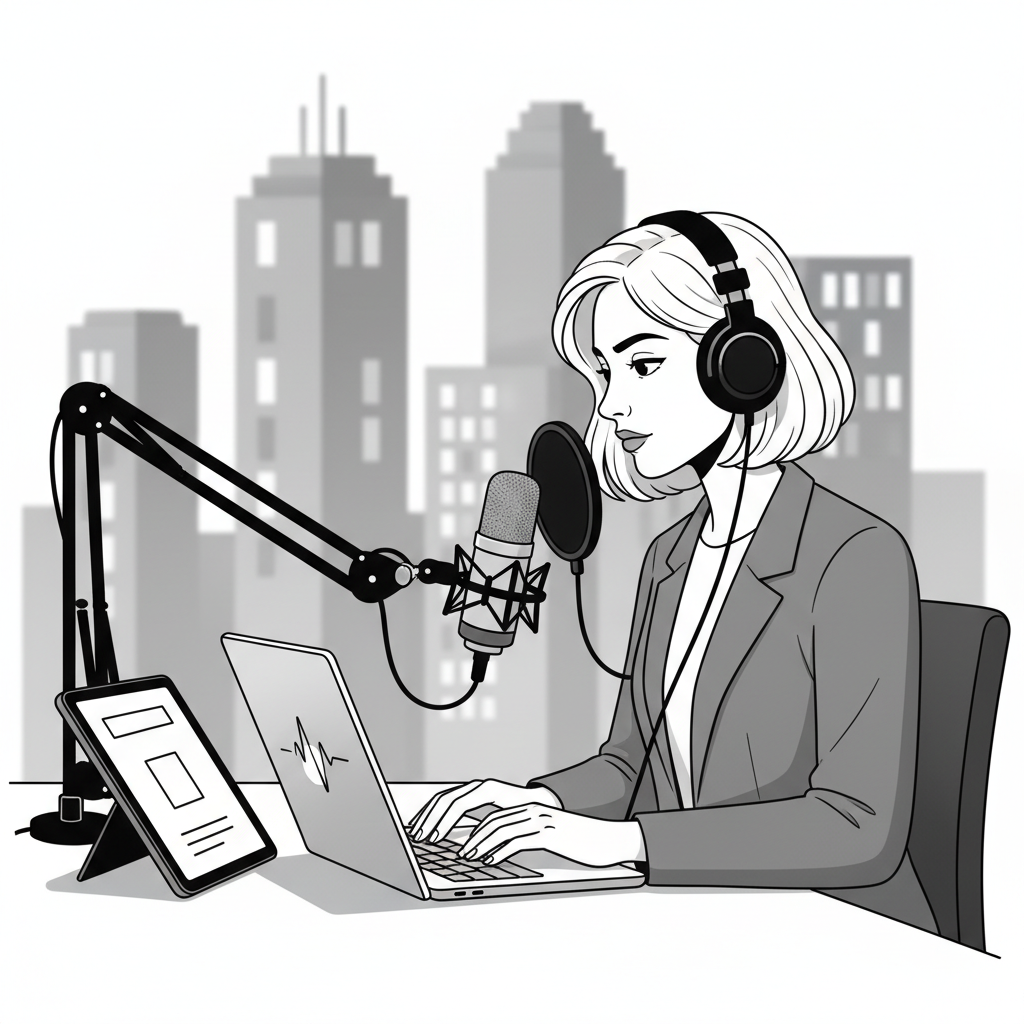
With your outline ready, it’s time to record. Find a quiet space to minimize background noise. Speak in a natural, conversational tone as if you’re explaining the topic to a single person. Don’t worry about being perfect; small stumbles make you sound more human and relatable.
Focus on clarity and pacing. Speak slightly slower than you would in a normal conversation and use pauses to emphasize key points.
This process is similar to adapting written work for other visual mediums; just like you would need to automate your YouTube scripts from a single blog post for video content, you must adapt your delivery for the specific demands and expectations of an audio-first audience.
Step 3: Edit and Prepare Your Audio for Publishing
Raw audio needs a little polish. Use an editor like Audacity (free) or Descript (great for beginners) to trim the start and end of your recording. Remove any major mistakes, long pauses, or distracting filler words like “um” and “ah.” The goal is a clean, professional-sounding episode that respects the listener’s time.
Add a simple intro and outro with royalty-free music to brand your podcast. Finally, export the file as an MP3, which is the standard format for most podcast platforms. The growth of audio content is undeniable, as shown by detailed industry reports on audio consumption habits from leading market researchers, making this a channel worth investing in.
Step 4: Publish and Promote Your New Podcast Episode
To get your podcast out into the world, you need a hosting platform. Services like Transistor.fm or Buzzsprout handle the technical side of distributing your show to directories like Apple Podcasts and Spotify. As you upload your episode, write concise show notes that summarize the key takeaways—you can pull these directly from your original blog post.
Most hosts can also generate a transcript. This is crucial for accessibility and SEO. Once live, promote the episode across your other channels. You can use the same methods from our guide on turning blog content into viral micro-posts for B2B leads on LinkedIn and X to create promotional assets that drive listeners to your new audio.
Common Mistakes to Avoid When Repurposing Blog Content for Audio
The most common mistake is reading your article word-for-word. This sounds unnatural and fails to engage listeners. Always use an outline and speak conversationally. Another major pitfall is poor audio quality. Invest in a decent microphone; listeners will abandon an episode with bad sound, regardless of the content’s quality.
Finally, don’t forget an in-audio call-to-action (CTA). Tell listeners what to do next, whether it’s visiting your website, subscribing, or checking out a resource. Just as you’d craft engaging emails from a single blog post for subscriber growth, your podcast episode must guide the audience toward a specific action to be effective.
Key Takeaways
- Your best-performing pillar blog posts are ideal candidates for podcast episodes.
- Create a speaking outline from your blog’s headings; do not read the article word-for-word.
- Invest in a decent USB microphone and record in a quiet space to ensure good audio quality.
- Use simple editing software to remove mistakes and add a professional intro/outro.
- Promote your new podcast episode by using your blog’s summary for show notes and generating a transcript for SEO.
Frequently Asked Questions
Do I need a professional studio to start a podcast?
No, a professional studio is not necessary. A quiet room in your home or office, combined with a quality USB microphone, is more than sufficient to record clear, professional-sounding audio for your first episodes.
How long should my podcast episode be?
A good starting point is to match the estimated reading time of your original blog post. For most pillar posts, this will result in a podcast episode that is between 15 and 30 minutes long, a common and digestible length for listeners.
Where can I find royalty-free music for my podcast intro?
There are many online libraries where you can find high-quality, royalty-free music. Websites like Epidemic Sound, Artlist, and even YouTube’s Audio Library offer vast collections of music suitable for podcast intros and outros.
Conclusion
Repurposing your pillar blog posts into podcast episodes is one of the most efficient ways to maximize your content’s value. It allows you to reach a different segment of your audience without the heavy lift of creating entirely new material. By deconstructing, outlining, and recording in a conversational style, you build authority and connect with listeners on a deeper level.
This approach is a cornerstone of an effective content system that avoids burnout. It emphasizes working smarter, not harder—a principle we detail in our guide on how repurposing one core piece of content can fuel over 10 different marketing channels.
Once your episode is live, the work isn’t over; promotion is key, and you can learn how to find hidden forums and niche communities to amplify your blog content to find new listeners. The powerful return on investment for this kind of content strategy is well-documented by in-depth industry research on marketing ROI statistics from leading content platforms.
Want proven systems to grow as a solo founder?
Learn more at SoloFounderMarketing.com — no fluff, no ads.