Table of Contents
I still remember the feeling. It was a Tuesday night, close to midnight, and I was staring at a blinking cursor on a blank screen. The pressure was immense: I had to get another blog post out. It felt like I was on a content treadmill, churning out piece after piece with no discernible impact on signups or revenue. This chaotic, low-impact cycle is a familiar pain for solo founders juggling product, support, and marketing. We’re told “content is king,” so we write. And write. And write. But what if the answer isn’t creating more content, but generating more value from the right content? This is where we need to think beyond blog posts. There’s a more strategic way to operate: creating a single, high-value cornerstone asset and methodically repurposing it to fuel your entire sales funnel for months. It’s a system designed to turn your content efforts from a frantic sprint into a sustainable marathon, creating a predictable flow of leads without needing a dedicated team. For founders feeling burned out, learning how to turn posts into profit is a game-changer.
The “Cornerstone” Philosophy: Why One Great Asset Beats 50 Good Ones
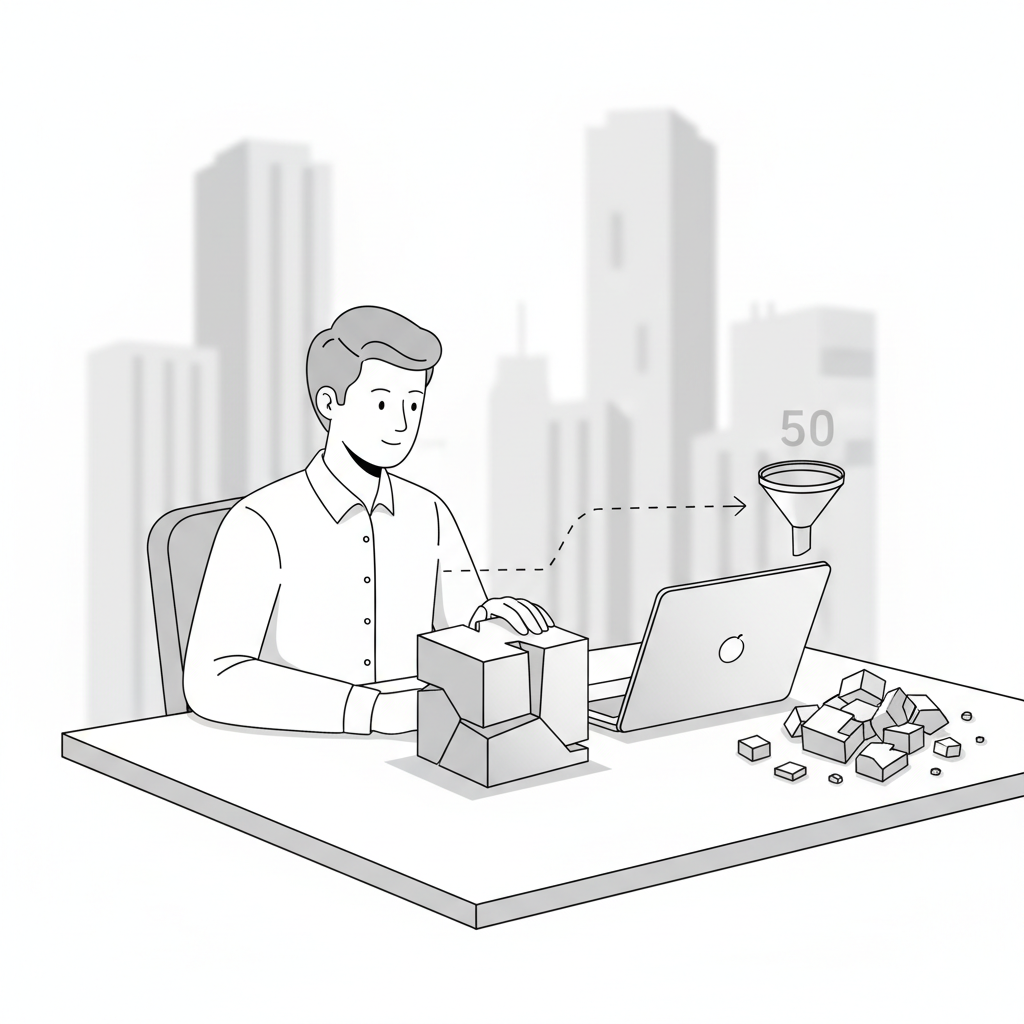
The default approach to content marketing is volume. More blog posts, more social updates, more newsletters. The result is often a collection of fragmented, disconnected pieces that fail to build momentum. The cornerstone philosophy flips this on its head. Instead of going wide and shallow, you go deep and narrow. You create one definitive piece of content—a cornerstone asset—that addresses a major pain point for your ideal customer in exhaustive detail. This isn’t just another blog post. It’s a signature piece of work, like an in-depth webinar, a data-driven research report, or a multi-part video workshop. The power of this approach lies in its density. A single, hour-long webinar contains enough material for dozens of smaller content pieces. It has video, audio, slides, a structured narrative, and a Q&A session ripe with customer objections and questions. By focusing your energy on creating one exceptional resource, you’re not just creating content; you’re creating a valuable asset that can be systematically deconstructed and distributed across your entire funnel. This fixes what is often a broken content marketing flow for busy founders, shifting the goal from “publishing” to “profiting.” It’s a strategic choice to prioritize impact over activity, a crucial mindset shift for any founder with limited time and resources.
Step 1: Choosing and Creating Your Cornerstone Asset
Your cornerstone asset should be the most comprehensive resource you can offer on a specific, high-value topic. For most B2B SaaS founders, the ideal format is a live or pre-recorded webinar. Why? Because it’s a multi-modal goldmine. It naturally contains visual (slides), auditory (your presentation), and text-based (transcript) elements. According to research from the Content Marketing Institute, webinars are consistently ranked among the top-performing content formats for B2B audiences, particularly for moving prospects through the consideration phase.
To create an effective webinar, start with a single, painful problem your customers face. Use voice-of-customer data to find a topic that resonates deeply. For example, a founder of a project management tool might create a webinar titled “The 5-Step System to Eliminate Scope Creep and Deliver Projects On Time.”
The key components to create are:
A Detailed Slide Deck: Not just bullet points, but well-designed slides with clear data, frameworks, and visuals.
A “Talk Track” or Script: This ensures your delivery is tight and covers all key points. It also becomes the foundation for future blog posts and articles.
The Video Recording: The full webinar becomes your core long-form video asset.
The Audio Recording: This can be stripped from the video to create a podcast episode.
* The Q&A Session: This is often the most valuable part, as it provides direct insight into your audience’s most pressing concerns and objections, which is invaluable for creating bottom-of-funnel content.
Step 2: Deconstructing Your Asset for Every Funnel Stage
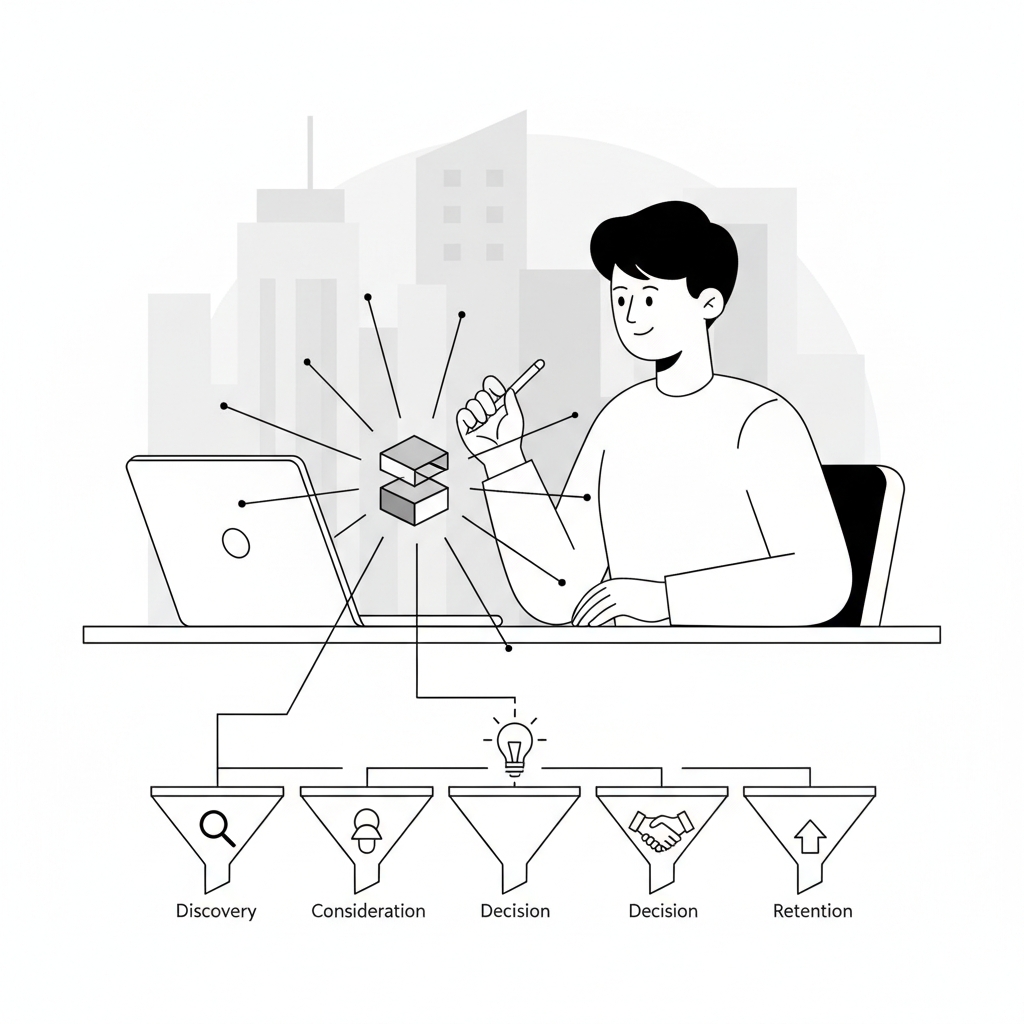
Once you have your cornerstone webinar, the real work—and the real leverage—begins. The goal is to slice and dice the asset into smaller pieces, each tailored to a specific stage of the sales funnel. This isn’t random; it’s a systematic process of matching the format and message to the audience’s mindset at each step. This is how you build a marketing system that works automatically. Some founders are even leveraging AI tools to help with this process, making it faster to extract key ideas and draft derivative content. The ultimate goal is to create an automated system that converts traffic into customers, and a well-structured repurposing strategy is the engine that drives it. By following a proven framework, you can build a machine that works for you, as demonstrated in this 5-step automation playbook for solo founders.
Step 3: Building the Automated System (No Team Needed)
Having a library of repurposed assets is one thing; distributing them systematically is another. This is where automation becomes a solo founder’s best friend. The goal is to build a “set it and forget it” system that nurtures leads from first touch to final sale without daily manual intervention. Many founders get overwhelmed by fragmented tools, but the key is to build a simple, linear workflow.
First, use a social media scheduler (like Buffer or Later) to build a content library from your Top-of-Funnel assets (video clips, quote graphics, audiograms). Schedule them to post over several months, ensuring a consistent stream of awareness-building content. Second, set up an email automation sequence in your email marketing tool (like ConvertKit or Mailchimp). This is your Middle-of-Funnel engine. When someone downloads your gated guide (the repurposed webinar slides/summary), they are automatically entered into a 5-7 day email course that delivers more value from the webinar. Finally, use the insights from your webinar Q&A to build out your product landing pages and FAQ sections. These Bottom-of-Funnel assets address final objections right at the point of decision.
This entire system can be managed with a handful of tools. However, for true efficiency, a unified platform is the superior workflow. The SoloFounderMarketing Toolkit provides this implementation layer, helping you structure the initial research for your cornerstone asset, generate the derivative content for each funnel stage, and manage the entire publishing workflow from a single place. It’s designed to transform this framework from theory into a practical, repeatable system, just like the one used by a founder who generated $10K/month from content without ads.
| Funnel Stage | Audience Goal | Example Repurposed Asset | Primary Channel |
|---|---|---|---|
| Top of Funnel (Awareness) | Grab Attention & Introduce Problem | Short video clips (1-2 min), Quote graphics, Audiograms | Social Media (LinkedIn, Twitter), SEO |
| Middle of Funnel (Consideration) | Build Trust & Showcase Expertise | Gated PDF Guide, 5-day Email mini-course, Detailed blog post | Blog, Email List, Landing Pages |
| Bottom of Funnel (Decision) | Overcome Objections & Drive Action | FAQ based on webinar Q&A, Short demo video, Case study snippet | Sales Pages, Pricing Page, Final Nurture Emails |
Key Takeaways
- Stop the “content treadmill”: Focus on creating one high-value cornerstone asset instead of many shallow blog posts.
- A webinar is an ideal cornerstone asset: It provides video, audio, slides, and Q&A content in one package.
- Systematically deconstruct your asset: Create smaller pieces of content specifically designed for each stage of the sales funnel (Top, Middle, Bottom).
- Map content to the funnel: Use short-form content for awareness, in-depth guides for consideration, and objection-handling content for decision-making.
- Automation is key for solo founders: Use scheduling and email automation tools to distribute your repurposed content systematically.
- A unified system is better than fragmented tools: Platforms like the SoloFounderMarketing Toolkit can help manage the entire workflow from research to publishing.
- The goal is impact, not activity: Shift your mindset from being a content creator to a content strategist to build a sustainable growth engine.
Frequently Asked Questions
What is the best type of “cornerstone asset” for a solo founder to create?
While it depends on your audience, a detailed webinar or a data-driven research report are often the best choices. Webinars are particularly effective because they are rich in multimedia content (video, audio, slides) that can be easily repurposed for different channels.
How much time does it take to set up this kind of automated funnel?
There is a significant upfront time investment required to create the high-quality cornerstone asset, which could take anywhere from 20 to 40 hours. However, once created, the repurposed content can fuel your funnel for 6-12 months, saving you hundreds of hours in the long run.
Can I repurpose an old, long-form blog post instead of creating a new webinar?
Absolutely. A comprehensive, high-performing blog post can serve as a great starting point. You can update it with new data, expand it with more detail, and then use that as the script to record a video presentation or webinar, giving you the multimedia elements you need for effective repurposing.
What are the essential tools needed to build this system?
At a minimum, you will need an email marketing platform with automation capabilities (e.g., ConvertKit), a social media scheduling tool (e.g., Buffer), and a way to create landing pages (e.g., Carrd). An all-in-one system like the SoloFounderMarketing Toolkit can streamline this by integrating the research, generation, and scheduling into a single workflow.
How do I measure the success of my repurposed content funnel?
Track key metrics at each stage. For Top-of-Funnel (social media), monitor reach, clicks, and engagement. For Middle-of-Funnel (gated content, email course), track landing page conversion rates and email open/click rates. For Bottom-of-Funnel (sales pages), measure your final conversion rate to signups or purchases.
Conclusion
For too long, solo founders have been trapped on the content treadmill, confusing activity with impact. The relentless pressure to publish daily or weekly leads to burnout and marketing that feels chaotic and ineffective. The secret to escaping this cycle isn’t to work harder, but to work smarter. It’s about making a fundamental shift from being a content creator to a content strategist. By focusing your energy on a single, high-impact cornerstone asset, you create a wellspring of value that can fuel your entire sales funnel for months to come. You trade the frantic, fragmented approach for a calm, methodical system that generates predictable results.
This is how you build a marketing engine that runs with minimal daily effort. It’s a system that respects your most valuable resource—your time—and allows you to focus on what you do best: building a great product. Stop chasing endless content ideas and start building an asset that pays dividends long after you create it. By implementing these proven systems to turn content into profit, you can finally build the sustainable growth machine you need.
Want proven systems to grow as a solo founder?
Learn more at SoloFounderMarketing.com — no fluff, no ads.